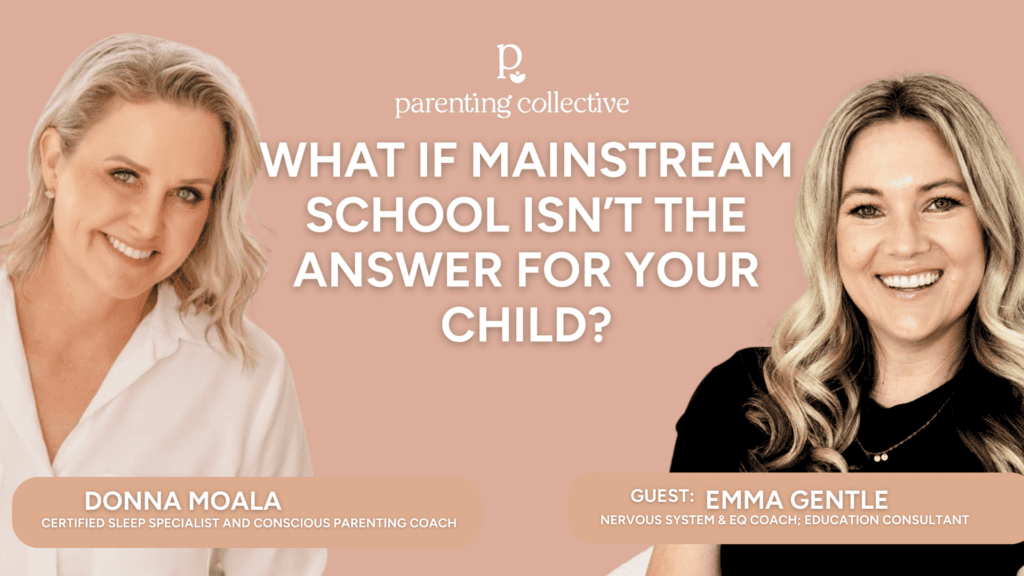
Hello and welcome back to the parenting collective. I’m so glad you’re here. Today’s conversation is one I’ve been
really looking forward to because it sits right in the really sensitive, uncertain place that so many of us are
finding ourselves in as parents. Am I doing the right thing for my child? My
guest is Emma Gentle. Emma is an emotional intelligence coach for modern moms. And before that, she was a teacher
and a deputy principal who spent many years in the classroom. So, she really knows the education system from the
inside out. And that’s exactly what makes her story so powerful because Em, a teacher who loves and deeply respects
teachers, made the decision to keep outside that system and homeschool her own daughter.
So, in this episode, we talk about how that shift happened, how homeschooling went from that’s not really for us to,
well, I think this is the right call. We get honest about the hard parts, the fear, the doubt. And M speaks directly
to the mom who feels that pull towards something different but is so terrified of the judgment that comes with saying it out loud. So we get into the big
fears too, like the socialization question, the myths she believed herself
and what actually turned out to be true once she began. So whether you’re homeschooling, thinking about it, or
just quietly wondering if the path you’re on is not quite the right one, then this is for you. So, grab your
cuppper, settle in, and let’s get into it. Here’s my conversation with M.
Good morning, M and welcome to the Parenting Collective. Thanks for having me, Donna. Well, like I just said, I’m very
excited. As I always say, everyone, I’ll just said that word again, but you know, I think everyone can hear my excitement
and the conversation that we’re going to have today. we’re very much in tune with
and I have been following you for a very long time and you did a very raw
authentic post that popped up cuz the algorithm’s all over the place sometimes about a choice of yours moving forward
with education for your daughter and I really want to talk into that because I know people are a bit stuck, confused,
don’t know where to go, don’t know what to do and I really wanted to get you on just to sort of talk through that with you know your expert knowledge around it
because you were a teacher and a deputy principal so you have been in the education system and then you are a
emotional intelligence coach or conscious coach which we talked about too and we want to dive into that cuz
some people haven’t even heard of those words. So welcome and I would love for you to share with everyone your purpose
and passion around this. Oh my god. I know. I know. I’m so sorry. Where
Let’s talk about your daughter. No, let’s talk daughter. That sounded so Australian, didn’t it? Let’s talk about Actually, I’ll give you more of a
prompt. Let’s talk about you being a teacher, your past, where you came from, and how it evolved to what you’re doing
now. Also, I did say to you, and I want to make it nice and clear to preface it, that teachers are amazing. Teachers,
nurses, police, they only get paid more. The respect that I have for teachers is beyond. And I find friends that are
teachers and the conversations that we’re having, they are exhausted. They’re not even able to teach anymore.
The kids are definitely haven’t got the same attention span. whatever is
happening. Again, I’m not the teacher that they’re exhausted, but they’re such so important for our kiddos. So, yeah.
So, go for it. Well, so I’ve been in education for 14
years all up. I sort of just transition, I would say, on the other side.
I started as a teachers aid because I was in between jobs anyway, and loved
it. After two weeks, enrolled in a Bachelor of Education primary, knew that that’s what I wanted to do. didn’t think
that I had to go to university cuz I actually Oh yeah, that sucks, doesn’t it? School so much. Pay the money. [laughter]
Totally. And anyway, became a teacher. Absolutely loved it. Relational practice was always my strength. Like I just
loved it. Which you mean? What do you mean by that? The interaction between parents and children. Is that what you mean with the relationship stuff?
Yeah, just building relationships with the kids. like and I knew that the you know the only way to get anything out of
them and to help them learn was to have really great connections with my I know it sounds so simple doesn’t it?
Yeah that’s the part that I loved the most um as a teacher it was all the other stuff that I was just like you
know I loved I loved teaching actual curriculum but it was the relationships and just seeing the growth and things
with the kids that I loved the most. You really loved it. Yeah. And so I taught predominantly in year 1 2 for many years. And then I and
a position came up as relieving assistant principal at the school I was in. And I actually wasn’t even going to
go for it. And my partner was like, why not? Like there’s no reason why you won’t get it. Okay, cool. So went for
that. Ended up getting it as a surprise. Was so excited. It was a three-year relieving role. Mhm.
At the time, so this was 2020, so co had hit and I used to train dress, my dress
horse and Oh, beautiful. Yeah. compete in that. And so I had I loved just working and and riding and
that was sort of my life. And my partner and I are quite adventurous. So we’re always off doing something. So co really
slowed us down and we were like, what what are we going to do? Like this is pretty boring. And so we’re like, well, we may as well have a baby.
Why not? Your husband would have had fun or maybe you would have had fun making the baby too. Yeah. Is that that’s the thing as
well? Well, it did take us about five months, right? I didn’t. I got this position and at the time I
was in the twoe wait actually and I said partner, let’s just put the family planning on
hold. I want to do this three-year relieving position because I was so excited about it because I was running
like the well-being for the whole school and mentoring graduate teachers and like all these things that I knew that I was
going to love. Yeah. No, the universe had other plans for me. So I right now you’re going to be pregnant.
Yes. So I ended up in that position for about six months um running well-being.
So running like smiling mind and supporting the learning support offices in the school. So really
so important trauma informed approaches and neurody divergent children and like that was my
forte anyway. I always gravitated towards those kids. Yeah. Yeah. And anyway, I then had a baby and
holy my whole life really turned upside down. Pandora’s box opened and yeah,
everything just started to come up and I now like obviously when I started doing
you know the work on myself and trauma and really my emotions and that’s what
happened. I I heard L stone on the imperfects podcast actually and I messaged her and I was like how like how
do I become you? Well, yeah. Right. Loved it. Love the way she spoke. Yeah. Yeah. Totally resonated with me. Anyway,
then I asked her to mentor me and she said, “Awesome.” Funnily enough though, I thought I was
getting into this situation where it’s like, “Cool, I’m going to be able to become this person. I’m excited.”
Anyway, I think I’ve I’ve every session I have with her still, I just end up in tears. And that’s
much what I learned, you know, like having someone hold space for your emotions and process things and talk
through things and beautiful thing that really sparked, I guess, more interest around emotional intelligence,
emotional literacy, our attachment, trauma, and how all of that impacts our development. And because I’d had a baby,
too, obviously I was learning more about I’ve always been someone who likes to learn and research. So,
yeah, me too. That was a little bit of a downfall too because I sort of because I was trying to be a perfect mom and do
everything wrong. Still surrender to that. Oh my god.
Thing that I say to everyone, surrender. You’re human. Has to be has to be middle name, right?
Yeah. So, all of that was going on and La had built her own school, Woodland Primary
down at Jalong. And I went and had a look at that and I was just like, what are we great in the education system?
This is absolutely wild. Like learning about so much around just early childhood
development too and and then thinking about my teaching career and going okay
I work with children as a profession and you know year one two is still early childhood.
Yeah. And just thinking I’m just so I have not been equipped for this. This is just absolutely.
So I’d done a bit of Berry Street training then and ended up becoming was that I haven’t heard that training. What’s that? Barrow street. What did you
say? Barrier street training. Barrier street and what’s that? So it’s a trauma informed training that
every teacher righting they partner with schools.
Amazing. And yeah so I was really passionate about that and because I was on
maternity leave I did a marketing course for some random reason for a business in the future. That’s what it was.
Yeah. I think my intuition knew that something was come from this. Yeah. And I ended up going back into the
classroom. I couldn’t go back into my AP position because they wanted me to work three days a week and I only wanted to
do one or two. So I went back in the classroom one day a week and because it was just this combination of having my
own child, seeing children differently, working with LA, you know, seeing Woodline Primary, it was sort of like
all of this was just coming together and I was back in the classroom and I was just, you know, we’d had some children
with complex trauma too and I’d seen that all play out and how I was sort of wanting to support this
child and he was responding to me, but then there was all this backlash and like differing opinions and I was just
like, I feel like really stuck here. I wish that I could share. I wish that what I was sharing was being received.
Absolutely. You can’t force people to be curious about it. Yeah. And so it just felt quite
mismatched and at the time I was like I think I you know speaking to LA like I want to start my own business and she’s
like just do it just go for it. So how long ago was that then? Was that 21 22 or 20?
So this was 2022. Yeah. Awesome. Yeah. So I started the grad guide which was a membership supporting graduate
teachers because I thought we’re going to make an impact in the system. We need the fresh ones.
They don’t have any biases. They’re not in any patterns yet and they’re so keen to learn. And so it was really around
supporting pre-ervice teachers and graduate teachers in adopting a trauma-informed non approach to
children’s behavior in the classroom. So it’s sort of like a 12-month mentorship teaching them all of that. and
absolutely loved it. I also had a podcast at the time. My podcast was called Let’s Get Schooled and I was
speaking to experts all over the world and yeah, it really blew up. And then I had schools asking me for professional
development and consulting and of course when you’re in business and you’re passionate, you just say yes even though you haven’t done it before. So I was
like, “Yep, yep.” I say faith it. We used to say fake it till you make it, but now it’s like faith it to you make it. It’s like yes,
please. I’m going to I’m going to say yes to that, but I just don’t know how I’m going to do it. And then it works out and you’re like, “Oh my gosh.”
Exactly. Yeah. So cool. So cool. So I just worked out and absolutely
loved it. And the thing was the graduates, you know, or the leaders, the
schools that I was working with, they were loving the PD and they would absorb it and then though taking it back into
their own classroom. So the number one thing was that the glue that really holds all of these approaches together
is emotional intelligence, the skill set. So the conscious parent, the conscious way of living doesn’t even have to be conscious parenting. You
know, I classify myself as a conscious life coach really because it’s not just about the children. Well, it’s not about
the children actually at all. It’s about us adults being informed like you said, generational patterns, trauma.
Yeah. So many things. And it’s like I say to everyone, this is not to scare people, but the world has changed and it’s
rapidly changing and our children have changed with their emotional intelligence a bit because of life. But
it’s like if you shine a light on something and you’re aware of it, then it can be acknowledged and you can do something about it. But if if you know
the blinkers are on and the schools don’t let people do this, these poor kids just struggle and struggle and struggle and they get so disconnected
from everybody and then they can get angry or they can get all of these internal disregulations or external
disregulations that get labeled. But really just you got to slow it down. You’ve got to be connected with them. You’ve got to
Yeah. figure it all out. Hey yeah. And that that is the trouble though that I was having like these
adults wanted to do the work. They were trying to do the work on themselves. But the environment that they were in was
yeah not conducive to what they were trying to create. And this is the problem that so many educators who are
passionate about these approaches and want to do this work. they can do the work on themselves, but when they
continually go into an environment that is mis and you know out of alignment
with their values and what they how they want to show up as an educator, they just can’t. they get end up
becoming more stressed, more frustrated and it’s just like a new paradigm and which is amazing that these educators
want to do that but supporting and I’m finding the same with you know even professionals education
professionals who are allied health going in to support teachers or children it’s just almost like a band-aid
approach because really you know we need to get into the early early years to
really support mothers and that’s why I’m doing what I’m doing now.
Yeah, really tackling emotional intelligence at the root which is starting others and that then obviously
ripples out. But yeah, it’s sort of I guess the reason why I was working you know my evolution in
education trying to change schools from the inside out which I truly believe in as a collective but
when it is just so slow and the world is rapidly changing it’s just like the gap
is getting bigger I feel. I know which is such a shame, isn’t it? Cuz it’s like I have these amazing conversations in
whatever area or expertise in their field and it’s like so clear. You know, the stuff I talk about, I just
feel like I mean, I’ve been obsessed with it for the last eight years, but in my own lived experience and and and
watching it play out and then having to be in such a traumatic situation with with the girls that it’s like, well,
this traditional parent parenting is not working. Going to traditional schools not working. It’s not the teacher’s fault. It’s not the school’s fault. Like the
schools were amazing, but me as a parent and my husband was found a lot harder cuz he’s not as emotionally intelligent,
but he did he did okay. We had to give up all expectations of anything, you know, like trying to get them to school,
like all of these things. And no one else was going through it at the time. And it was very lonely. And so as we got
through that and got the help and got the family counseling and the family counseling was that first insight of like
okay it’s not about her but not again shame or guilt for the parent. It’s like we didn’t know all this stuff and so we
had to really uncomfortably change the way we looked at parenting and then you know like I always say it’s our
beautiful chaos still. It’s not a a a you know rain rainbows and unicorns all
the time in our house, but it is understanding what’s going on, understanding the generational patterns
that have come from both both sides. Our reactive our dysregulation with things and not taking things personally with
the kids and not having to be so cookie cutter of the kids have to go to to university and they have to go to do
this and it’s just it blows all of that out of the water. And we had to let all of that go. And you know, both of our
kids, and I share this all the time, are going to uni. Again, wouldn’t have minded it either way. I think education
of any kind is great, whatever you do. Um, and they missed a whole lot of a year, year 10, and 11 through their
mental health. And that’s why I want to share the story is like in the deep dark times
that if you can have the hope and and and learn all of this emotional intelligence and this conscious living and the conscious parenting, it’s just
being aware of why what what’s behind the reason that child’s hitting. What’s behind that reason that that kid doesn’t
want to sit down, you know, why why you know the wise, you know, figure out the wise and we’re
gentle. am gentle and um you know like you said with that kiddo that started to really respond that would is so
heartwarming for you but it would have taken a long time for him to to gain your trust so gain his trust sorry and then and
that’s you know the teachers don’t have time do they’ve got to teach them so it’s like a whole another facet of that
emotional intelligence and support right yeah and so I think I I totally agree with what you’re saying like it’s
about us being conscious and our children’s behavior is just mirroring
often. What’s going on? It sucks. What do you mean? That was the
biggest thing that I say to everyone because we the kids at different they had their struggles at the same age but
they back to back. So a couple years the eldest the oldest was getting better and the middle started getting unwell and
we’re like what? And then when we were did all the different counselings and we did everything we could you know it
wasn’t about not getting the support for the children. There just wasn’t what was needed. And then when we did that that
family counseling like I said to you, that’s where we’re like, “Oh, what do you mean is and I had to go through,
geez, is it our fault?” But then it’s not it’s not like, okay, sometimes parents can be blamed for sure if their
actions aren’t in line with what we know is right. Good. I don’t know how to say
that. But, you know, we felt like we were good parents. We were doing the best we could. You know, I stayed at home for 10 years. That’s unheard of as
well. That might not have been the best thing either. But when we had two psychologist counselors working through
that generational stuff which is the conscious subconscious stuff which is the awareness.
Wow. Life changing. It’s like it’s a slap in the face that my clients say that to me. It’s like oh
my god I came in to work with you for a different reason than Yeah. Thank you. What do you mean that’s
what she’s doing? Like don’t did don’t you want to hear what she’s doing on the weekend? you know, because it was that
14 15. Again, that’s a whole different thing to talk about about age appropriateness, age appropriate
behavior. Again, we’re living in a world where parents like want your child to be the most compliant cookie cutter child.
That’s not normal either. So, how about just think about what you were like as a teen and okay, we’re going to have
morals and values and rules and, you know, positive discipline and all the things that conscious parenting is. It’s
not permissive parenting. It’s like guiding, mentoring, but it’s not always about the child. Sorry everybody,
it’s how we look at it and how we can support and nurture their nervous system. Yeah, totally. And I think that it’s not
I think one of the troubles is and what I see a lot in my clients is that
mothers who aren’t in our field also because when you’re a coach in the field, it’s easier to do the work on
yourself. I know you have the knowledge and the background as well as the lived experience. it’s much easier. Whereas if
you’re coming in, you know, and you’re just you’re new to this work and you’ve just been working in an office or something
and you don’t have any prior knowledge, it’s so confronting because very confronting
the shame and the guilt like you’re a bad parent and you’re doing and because we have the research, you know, and the
understanding and the knowledge behind us, it makes it easier to come back into balance when you are feeling the shame
because that never goes away. Those emotions. Oh, it doesn’t go away. And, you know, I’m not a teacher. It’s not my background. You know, I’ve done 10 years
of working with families in sleep and I’ve done 30 odd years of healing and growing of myself. [laughter]
Lots of money spent on psychology and I’m a learner too. Always if something’s happening in my life, I need to know
about it. Why? Which then has enabled me to be this coach now sitting here? But also when we were going through that
really tough time, especially with our middle who is the most awesome kid, but she is really strong willed. And so this
is what’s happening. I see a lot strong willed get slapped that naughty or bad behavior but it was just a
disregulation. She had anxiety and the disregulation came out in yelling and screaming and anger. So you’ve got your fight flight freeze for response when
we’re emotions are disregulated it’s the biological set off. Do you withdraw? Do
you yell and scream because it’s the fight. Do you freeze? Cuz you know and people the more they understand that you
can have a bit of a breath and think okay she’s not yelling at me. Okay, we need to understand what’s going on and
then looking into it deeper and then being the calm when you can you know and
this is all what happens I would say needs to happen at school but the poor teachers have what 20 to 30 kids in the
class so if you’ve got you know three kids that are disregulated where you know back in the day there wouldn’t even
be one sometimes in the class the teachers are just not getting supported around that on on how to you know be
able to move through those situations. Yeah. And I I think because there’s sort of been this evolution, I guess that in
classrooms traditionally it was, you know, you have to be quiet, get your work done. And so when you’re referring
to dysregulation, like there were plenty of disregulated kids, it was just that
they were in freeze and shut down or just not fight and flight. Whereas now what we’re seeing is I think you know
there’s also been this because we have now the conscious parenting and we are trying to allow
children to have their emotions. Yes. It’s harder to parent. Well, it’s harder to teach because
they’re trying to allow emotions and also say no to the behavior. But there becomes this
blurry lines I think too where gray area. Yeah. If you’re not leading in the classroom and you’re not aware of how to
have that authoritative, you know, leadership style as a teacher, it can be really hard to be like, you know, how do
I allow the emotions but also help Johnny understand that he can’t throw scissors across the room, you know, like
where’s the line? And totally trying to they don’t get the tools. They haven’t they haven’t been given the tools.
Well, yeah, that and also the classroom is just not conducive enough to support
that many kids in this way. And I think that that there’s so many kids like I was talking to an early childhood expert
last night who’s one of my friends and she messaged me and was like, I’m struggling in the early childhood
setting at the moment even to help educators with regulation because they’re so disregulated themselves and
they’re also the kids are also coming in with way less skills because it’s starting so much earlier. Uhhuh.
Ask me why I thought that. And I think one of the contributors is that you know parents are just so busy
because of the if you are stuck in the rat race and the chaos of mainstream life of society. Mhm.
Both parents are having to work to to have an income. And then so more children are on devices or on things
that are helping them, you know, be calm or be quiet, which is a temporary nightmare
because I work with kids up to 10 years of age and I work with a lot of neur children because I’ve done a lot of
study on that and lived experience. You feel like it’s just a simple thing, but you know, a little girl that I’m working
with at the moment, the mom was just in tears all the time. She was working so hard. She was sick all the time. She’d
pick the daughter up from daycare. She’d get in the car. She’d scream. She’d scream. She’d scream when she’d wake up. She’d scream for ice cream. She’d scream
for this. She all all the things you think nightmare. And she was just so overwhelmed with sadness that she’s
failing. And I’m like, firstly, you’re not like this world that we live in now is just so full of pressure. And I just
always want to just reach out and give them a big hug, which I that’s I support them through that too. But what we ended
up doing is just I don’t just look at the sleep. Like sleep’s obviously very important for our regulation, but it’s a
whole lot of other things leading up to it. So we cut the TV, we cut the phone, we cut the all the things. Now TV is
okay. If you go back to old school just big TV for a little bit of time every day, great. I don’t want people to think
they can never have TV. But it’s the the dopamine hit of a phone. It’s a dopamine hit of the fastm moving YouTube or
whatever. And she then not even 3 days after was like in tears happy way going
I cannot believe the ch the change. She’s independently playing. She’s not having meltdowns. And so it was setting
these conscious parenting boundaries. So you know when we talk about not being permissive because people are like oh is
it gentle parenting? I’m like oh gosh whatever let’s explain it. It is like you said modeling a role being you know
being their free front p frontal cortex the one where you know was that where they respond and react calm down take
your time get them off the phones go back to old school riding bikes
and it works you know like we can over complicate it but you know what’s contributing to so much
dysregulation in the classroom is just that yeah stress parents stress kids that aren’t developing the
way that we know children should and it’s a reflection of just the state of the world but
it is I think like the reason I love doing this work is and why I wanted to work
more with mothers rather than schools is because they have choice they have more
choice and autonomy like teachers and leaders are doing an incredible their so
much red tape even if they want to do this work it’s so much harder for them and yes we have schools that are like as
a school doing such a fabulous they are starts with the top you know if the principal’s on board and they’re willing
to invest in longterm and not chop and change because that’s one of the challenges in the education system too.
is, you know, we have school plans and there’s always something to have on the school plan and there’s a lot of like let’s just do things to tick a box and
we Yeah. of working with children and you know there’s so many challenges though like
staff turnover and mental health of staff and all of these things. It’s like goes on. But this is why this is
obviously influencing our decision to potentially homeschool because
we’re going to be spending an hour just talking about you for anyway, but I would love to dive into that. But yeah, that that you know I think we’ve given
the listeners a really good understanding of what you are doing and what I’m what I’m doing as well and and it really starts with the parents and
it’s not again shame or guilt because everyone might you know needs to work and things but it’s also having those
snippets of real connected time or understanding what’s underneath that iceberg of behavior. So I think like I
said we shared I made it nice and clear but again the reason that I did get you on was obviously have this chat but with
all of your expertise and your knowledge and everything you had made a post about the decision and a big decision of of
possibly or not going to mainstream school. So yeah I’d love to hear yeah your thoughts and your heart around all
of that. Yeah. So, I was talking to another beautiful lady who was a former
assistant principal and teacher as well who now homeschools yesterday actually and
we were saying how, you know, it’s not just one decision where you go, okay,
I’m going to verse homeschool verse mainstream schooling and just and just pick one. You know, there’s a lot of
reasons why the decision is being made or discussed. And obviously a lot of the
reason is what we’ve just spoken about in terms of the environment that classrooms like the environments at the
moment that are in classrooms and I have a lot of friends who are teachers and they’re doing such a brilliant job and
they’re also just doing what they know and sometimes when you’re just doing what you know and you haven’t
really explored or been able to be regulated enough to be curious about
Yeah, that’s the other thing. Yeah. um then you are just doing what you know and you think that it’s just the way
things are. And so I guess because of my experience so far moving away from the system and
seeing this other side of life as how we can live and that we do have options and
I’m a I’m the sort of person that is happy to be like no I’m doing my own
thing. Like I’ve always been a bit of a rebel in that way to be like unique. I like to call myself I’m a bit
the same. Yeah, I’m [laughter] happy to do something different. Yeah, me too. Definitely the same too in the he just
runs his own race and doesn’t really care is doing. Love it. And so yeah, homeschooling it has been
challenging to even have the courage to look into it because I’ve had and I had a bit of resistance
for a while because people would say to me, “Oh yeah, you should start it. You should start a thing.” And I thought
start a thing. Like I don’t want to start a thing. That’s that’s a big thing. But you might
accidentally inadvertedly start a thing. You know that, don’t you? I’m happy to be part of the community,
but I’m not like starting a thing. And you’ve already started a thing. Your ball is rolling.
That’s not my issue. I start too many things. That’s right. Exactly. You’ve started a thing. And this is the whole thing like
like we joke about this for myself, but you know, everyone’s like, “What do you do?” And I’m like, “Okay, well I started
with sleep, but you know that I’m teen mental health. I’m neurodiversity. I’m sleeping teens. I’m now conscious
parenting. So, it’s like it sounds like the conversation with you the same. It’s like you’re forever learning and evolving. And then being a mom just puts
that mirror up, doesn’t it? And like, okay, well, this is what I want or don’t want for my child. But the person that you are, the researcher, the person that
wants to find out everything, of course, you’re going to people are going to come to you and go, “Oh, so how’s that choice been going? Where do I go? What do I
do?” I mean, you don’t have to make a thing about it, but people are going to come to you for sure. Absolutely. And I’m so happy to, you
know, sit beside them and um, you know, yeah, I’ve been asked so many times, just start your own school and we looked
into it actually at one point in time and decided that was just not something we wanted to take. No, maybe later.
Yeah. Watch this space. Um, so I want to ask
really a bit more specific with if you don’t mind a bit more because I you like you’ve just shared that you you’re
totally okay to do uh things that not the norm but majority of people that I work with don’t even understand that
that could be an option meaning they might have this really strong uncomfortable feeling of like I just
don’t want to send them to school but society tells me my family tells me um what would you
if someone was listening to this and is really feeling that and hasn’t got a voice around it. Is there anything that
you could share with them? Yeah, that would be a positive like just do it and this is why.
Yeah. So, I think this is the most important part of making a decision like this is understanding whether you’re
making the decision from fear or from desire. And sometimes be hard to even distinguish what that is. like what is
fear and what is desire? If you haven’t if you’re not wellversed with your emotions and sensations and your inner
knowing and your intuition and you’ve spent a long time ignoring all of that and doing what everyone else has told
you to do, then it can be really hard to think about, yeah, am I making this decision because I had a terrible time
at school and it’s fear based and I’m anxious and I don’t want my kid in the system for that reason.
looking at it from a perspective of okay, this is our family unit. These are
our values. Here’s how we see the world playing out for our children. Here’s what we want for our children in terms
of the skill set. You know, we want them to have because we want our kids to be the most
authentic expressed version of themselves with less baggage from us. That’s why we’re
trying to do our work the best we can. Yeah. They can do whatever they want. Like you said, you know, your daughter’s
going to uni. I don’t I don’t have any issues with any higher education or any
mine either. It’s like I want my children to thrive in academically. Of course I
do. But I think that we can have both. I think that our children can be people who are so self-aware and emotionally
intelligent that they are connected to themselves and because you have to look at what’s
happening in the world in terms of AI is making knowledge so accessible like anyone can learn anything about anything
and become whoever they want to don’t matter as much like if you look at people who are thriving as entrepreneurs
too they are monetizing their skill sets what they’re good at right so When our children are 18, I want them to be able
to follow their passions and do whatever they want. And if they can monetize that and also have a life that, you know,
they they’re doing something from purpose and passion and they’re healthy
in themselves. And mental health for me is like the, you know, and the thing is we talk about mental health a lot and everyone
struggles with, you know, worries and stuff. That’s a normal human experience. But when our kids were younger, I was
already parts of me was already doing conscious parenting without understanding what it was. Meaning I always allowed them to do what they
wanted in regards to what they wore. Even if it looked embarrassing for them, I just would, you know, it it I really
allowed that to evolve. But when they got to high school, particularly our eldest, it kind of annihilated her. And
that’s why I’m so passionate around this because not not now, not back then on
reflection would we would have gone an alternative school. Again, it was just not really talked about. My husband’s
Catholic, went to a Catholic school and I went to a country school. Can’t even know there if I got educated or not. Um
but truly um h but it was a lovely school. Got best friends there still.
But you know u but what ended up happening when she got to that high school and she was very comfortable in
herself in primary school. Yeah it was very hard for her to be her authentic self but with that and conscious
parenting and supporting her through it. She is absolutely thriving with her authentic self and uni no uni like you
said not bothered. We just say do the best at whatever choice you make. Whatever you do you’ve got to work hard
at it. Like that’s what life’s about. Be passionate about it and and it will flow. But yeah, we absolutely wouldn’t
have minded if they didn’t go to uh university. Although my husband’s a little bit, it took him a little bit to
get around his head space with that cuz he was very highly driven and you know
physiootherapist and intelligent in uni just thought that’s just the way it should be, Donna. And I’m like well you
married me and I didn’t go to uni. Yeah. you know is right and that’s why I
think that when you’re making decision from fear versus desires it’s like really being honest with yourself around what are my
actual reasons for wanting my children not to be in the mainstream
system and often it’s [snorts] not just one thing there’s a myriad of oh so many things I look again this is
just how I would look at it and I might be incorrect in saying this be a parent
be a mother love your child as we do, let them try and be authentic. I know that sometimes feels a bit uncomfortable
if it’s not cookie cutter, but it’ll that is where the fe it won’t be fear based. It’ll be like that’s that’s just
not going to fit my child. The other thing that gets really thrown all around a lot and people aren’t understanding is
the older generation are like, you’ve got to make them go to school. You’ve got to what what do you mean they’ve got school refusal? What do you mean? you
know, and I’m like, you know, it’s the whole thing of like building the resilience up for your little child
to be able to go into a life of fullness. We don’t want to shove them out there if they’ve got mental health
or illness, you know, anxiety, because that’s going to make it worse, but we’ve got to support them to be able to do uh to build that resilience. So, when you
homeschool, I know lots of people that do, and there’s lots of really great communities that are helping families do
that. It is that slow building of resilience. So then when the child gets a little bit older that they have the emotional
intelligence and the neural frontal cortex is a little bit more developed that they can handle things a bit more
or you know pick the right friends that they need to hang out with rather than it all just thrown on them when they’re
three you know. Oh my god. Totally. And I think that’s one of the things seeing how young my
daughter is and knowing that you know she’ll just be popped into a classroom made to sit still and you know
fools your soul doesn’t really even need to learn at the like at the moment they don’t worms for mustaches like
I know later bugs in the garden she goes out with her dad and
does all these cool things and I’m like let’s like that’s where my teacher brain goes how fun
totally learn around things you actually learn through play. Exactly. And
I think that that is just one of the aspects in that understanding how children actually learn is just
completely different to what they get in mainstream and that’s something I want to foster around I love that I love that
regulation. Totally. And the other thing that I say to people too because I only know what I know and the families that I work with,
you know, there are a small percentage of kiddos that just love to sit down and love to draw and love to write and read.
Wonderful. The mainstream schooling is going to really probably be okay for your kiddo. But ch my children were not
like that. My eldest who was the first who was like, “What do you mean what adds like what?” Again, you know, I was
the ADD looking around doing all different things, didn’t realize that’s what it was, but everyone’s obviously
more aware. But she was made, she was only three in a bit when she started kind. And they only did half days and
they only did three days a week. And even that was tough for her. Um, she ended up redoing pre- primary, which was
the best decision made, but I was really upset about that because what was everyone going to think?
Best best thing that ever happened ever. I don’t think people even have that choice now. So, why I’m saying that is lived experience watching who I’m
working with and some kids just are not ready are not ready to sit down and write their names. Yes, they’ve got to learn the alphabet and their numbers and
their like, but we can we can teach them through play. Yeah, exactly. Yeah. It’s so rushed and
forced. It’s actually crazy. And teachers are just trying to get through the curriculum the best they can. And if
you’re a teacher who you know does fawn often and you feel like you have to get
through everything and you’re putting pressure on yourself and that’s why so much of what happens in the classroom like is teacher dependent in that it
depends on what if they’re aware of how they’re actually showing up and the pressures they’re placing on themselves because I also know teachers who you
know they still follow the curriculum but they also know what’s best for which is great so they can adapt and
very excellent at their craft and that but they’ve been given the tools obviously you know like if they if you come out of university and it’s only
a certain way of teaching you know anything that is helpful
I know so crazy so just to finish up then have you then definitely made the
decision that that’s the path you’re going to take um no not definitely like and and I think this is the thing
that there are a lot of people following me at the moment that are trying to make the decision as well you got to be careful what you probably
but That’s your private journey. So, yeah. Well, and it has to be um a conversation like get curious about it
and keep having a conversation like because it’s a choice we’re making in our family unit, not just my choice.
No, that’s right. It’s about just working through it and looking at different options and and considering all the things because
another thing I didn’t mention like she would have to be on a bus for at least 40 minutes in the morning and
that’s too Yeah, it’s huge. Um not for a little kiddo. No. So, there are so many Yeah.
different factors that you so many and again like I said we could talk about uh this for so long and thank
you so so much for sharing all of that. If someone is to can they reach out are
you in your DMs? How can people contact you or moms contact you if they’re having these same feelings and just
don’t know where to start? Yeah, just message me on Instagram MJ and I’m happy to yeah chat. But I am
definitely putting more content out and podcast about it so that people can follow along and
I love that to the different perspectives. Yeah. And you’ve lived it, you know, you’ve really lived it. You’ve lived
being the teacher in like you’ve done all of it which is then enables you to be an expert in this space. You know,
again, it’s that lived experience, isn’t it? Is like becoming a mother, watching the schools, you know, evolve or not
evolve, what’s happening with your beautiful kiddo, you know, like you’re going through it. You’ve been in it. You’re going through it. you see the
change with conscious parenting and and that sort of emotional intelligence. So you’re living it
and and still like I say I say to everyone when I’m coaching and I just want to get to this place and I’m like
you know there’s no end destination until we’re not on earth like the the life life is a journey and I know
everyone uses that word all the time but it’s just an exciting let’s learn let’s do the best for our children you know
for me I say to everybody I love what I do I love it and I’ve been doing it for over 10 years my role as a mother always
will trump that always. If if tomorrow something happened and my kids needed me, you know, they’re always going to
know that I’m the soft place. Always. I want them to leave the nest, they don’t like hanging around me anymore, which is
really sad. But they’re all living at home still and they’re having their best life. They’re out all the time and just
really happy. And that’s brings me so much joy, but they’re not hanging with me. But um I’m their safe space and I
will always be that. And I think as moms, if if we can really work with the moms to understand, we know that we’re
the the safe place, but how that can really help our kiddos build that resilience to go off into the world
because that’s what our job is. Our role is to build them up enough to leave even though that’s sad.
I know. I know. It’s when they were all I had three at home and my husband was a physio so he
wasn’t home a lot building a business and you know it was three under three under five and I just remember at times
just sort of wishing it away. Yeah. And then I’m like, now that they’re older, I’m like, don’t go. You don’t
have to go. That’s all right. Yeah. At every level, like at every stage,
there’s challenges and there’s beautiful parts. It’s just There sure is. There sure is. Well, thank you so much. I can’t wait to watch
your um journey around this because yeah, you’ve now got that platform that obviously people respect where you’ve
come from, what you do, your intelligence around it all, emotional intelligence, but yeah, you you know, understanding of it all and you’re going
through it and you’re talking about it, which is people need AI is amazing. I’m in love with it. It’s my new best
friend. But um it’s still AI. People are still human. We still need the human experience. And to get that, you know,
like you could ask AI all this question. It might spit out exactly the same thing word for word, but it’s not a human.
It’s not that human feeling. Absolutely. So, yeah. Thank you so much, Em. Have a
lovely day and thanks for your time. My pleasure. Thanks for inviting me on. Thank you.
So, if you enjoyed this episode, be sure to leave me a rating and review. I love reading all of your messages. So, shoot
me a DM over on Instagram. It is parentingcollective.auu. I also offer a free 15-minute no
obligation phone chat. If you’d like to book one, head over to my website www.paringcollective.com.au
and request one there. So, try to remember to be kind to yourself and always know you’re doing the best you can every day, no matter what your day
is looking like. Until next time, much love.